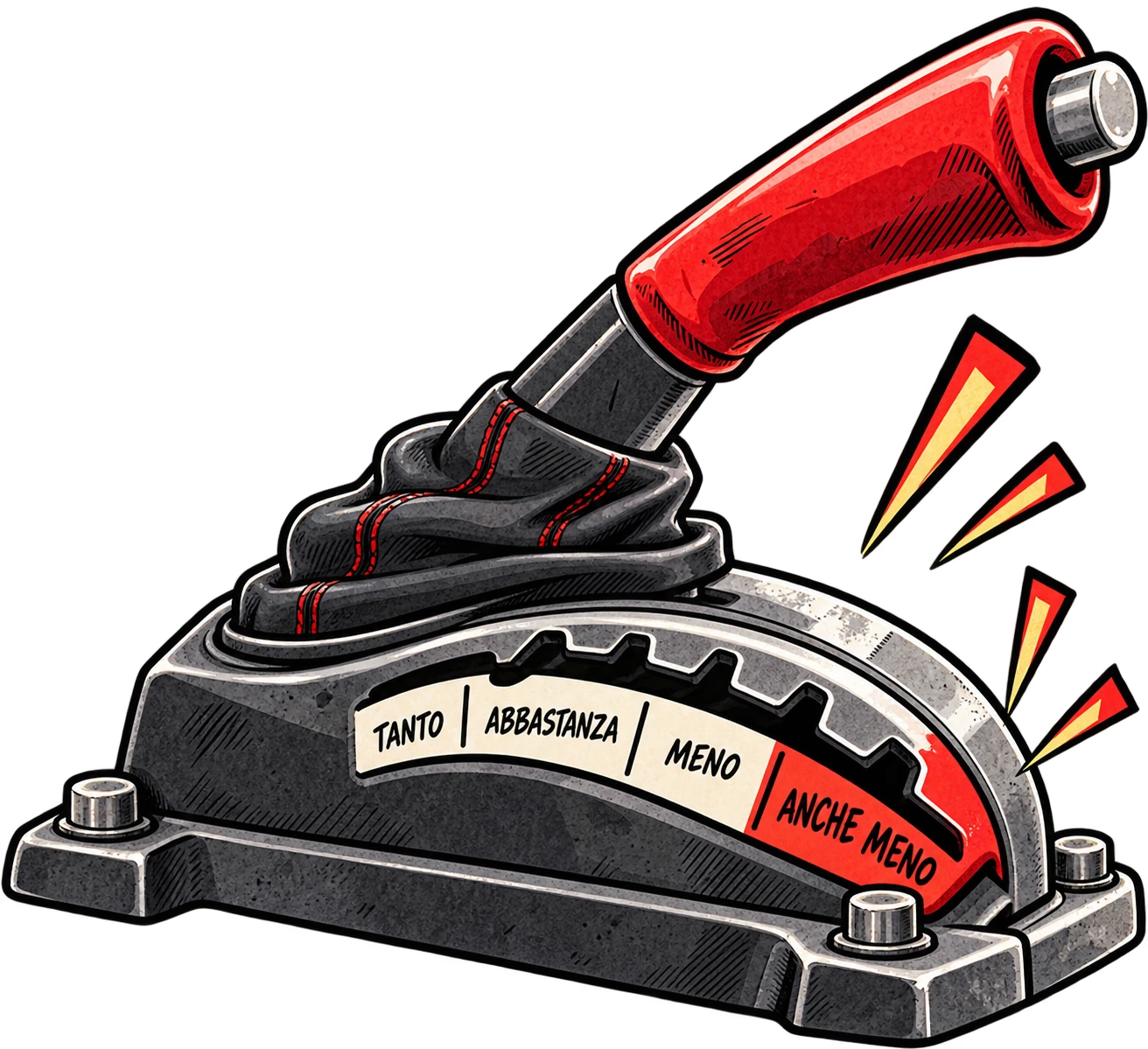
What it looks like
First-person plural of the verb dire: “we say”.
What it is
Quality control applied to honesty.
When an Italian begins with diciamo, they usually know exactly what they think. They have simply decided they cannot say it like that.
“Did you like the restaurant?” — “Diciamo the company was excellent.” The restaurant was awful.
Diciamo is the particulate filter of Italian speech: a brutal thought goes in; something socially roadworthy comes out.
At work
Its natural habitat. “Can we deliver Friday?” — “Diciamo Friday is ambitious.” Translation: no.
It does not necessarily create a lie. It carefully selects which part of the truth can survive the conversation.
How to read it
Between telling the truth and not telling it, Italians discovered a third option: telling enough of it.
“Diciamo it could have been better” = it went badly. “Diciamo the price is important” = you are out of your minds.
If the answer starts with diciamo, listen for the sentence that was deleted before it reached the mouth.
“Diciamo it isn’t bad” might even mean it isn’t bad. Diciamo.