What it looks like
Italian. One language, spoken by around sixty million people.
In theory.
Say one sentence and somebody will ask: “Are you from Puglia?” Thirty years of integration erased by one vowel.
What it is
In Italy you can change city, job, friends and car registration. Your accent travels with you.
You may speak flawless Italian. You cannot hear your own regional colouring. Everyone else can.
An open vowel, a doubled consonant, a melody that rises or falls: the radar starts. North? South? Veneto? Rome? Puglia? Sicily?
The scene
“Where are you from?” “Milan.” “Milan Milan?”
Abroad we are Italians. In Italy we are Lombards, Pugliesi, Venetians, Campanians. Inside the region we become our province, then our town, then our neighbourhood. National unity did what it could.
How to read it
A country able to locate you from a vowel naturally turned geography into personality. A southerner may be called terrone, a northerner polentone, a Milanese bauscia. These can be insulting, affectionate or ironic depending on who says them and how.
Then come the stereotypes: the stingy Genoese, the blaspheming Venetian, the unhurried Roman, the Neapolitan who has already found a solution not mentioned in the rules.
They are stereotypes. They are absurd. And every Italian can explain for half an hour why the one about their own region is false while all the others are surprisingly accurate.
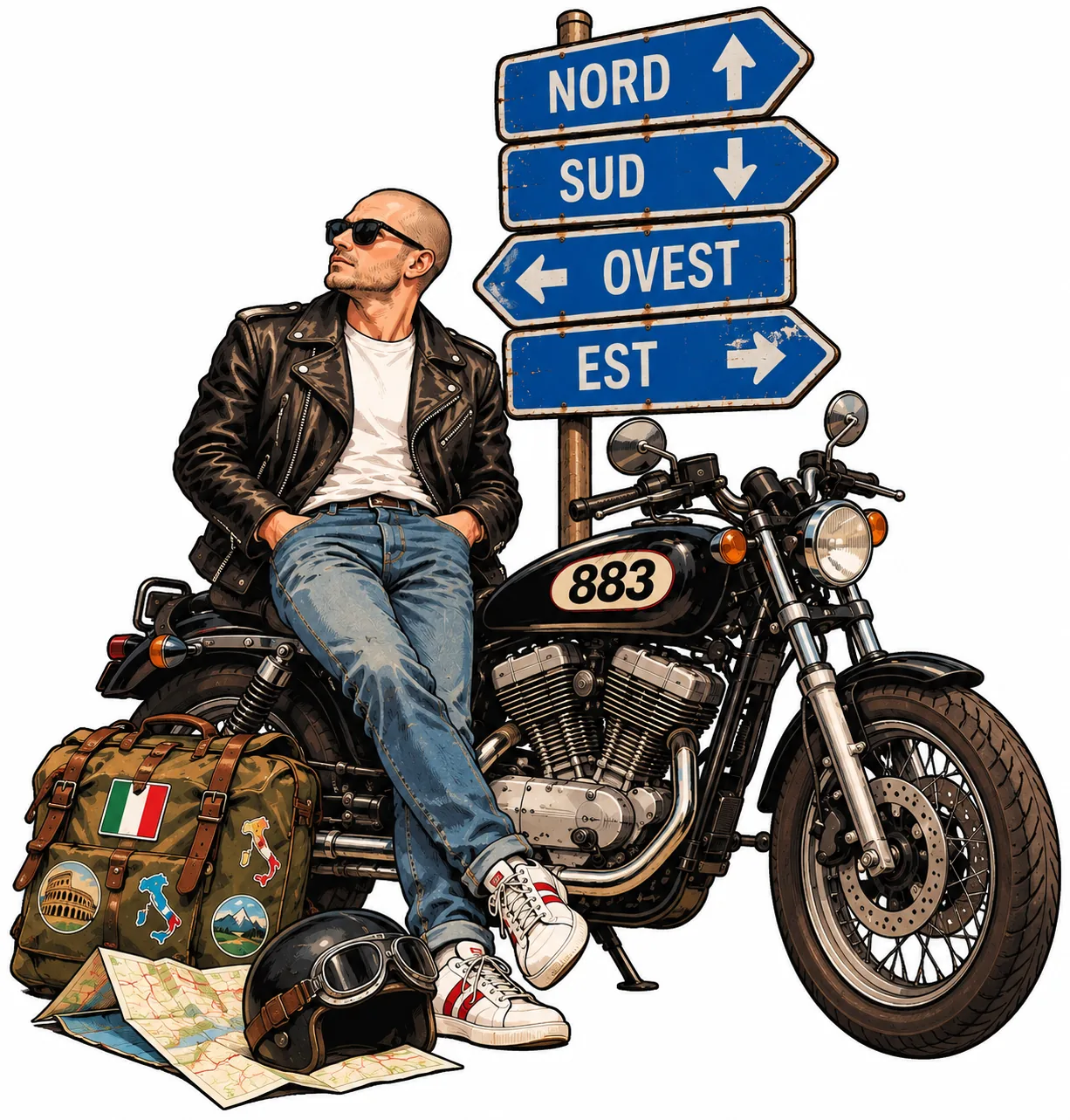
An accent can fade. Then you phone your mother and forty seconds later you are exactly back at North, South, West or East.
It is a small phonetic homeland we carry around. No need to show your papers. Just say something. We’ll work it out.