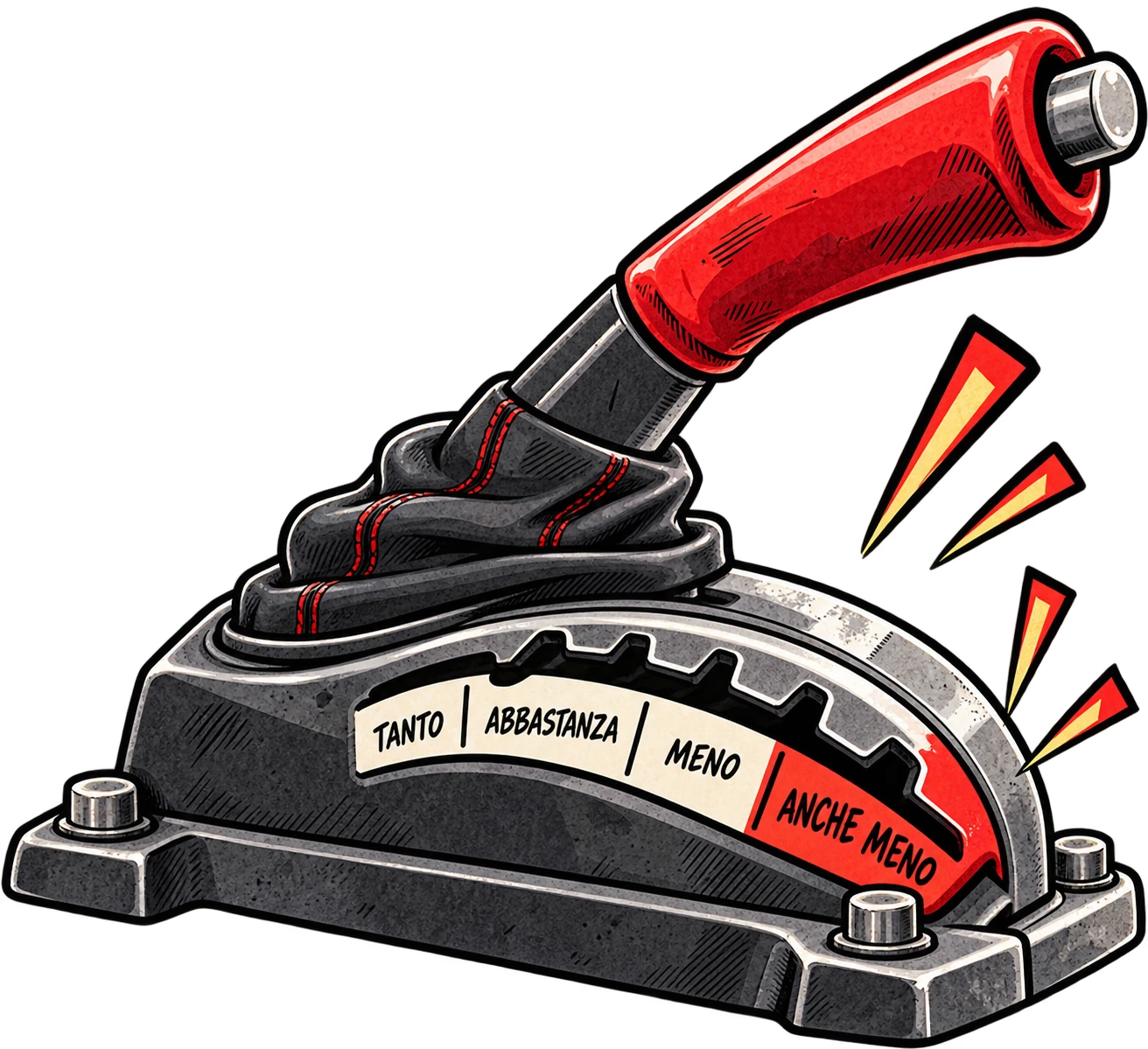
What it seems to be
A request for time.
What it really is
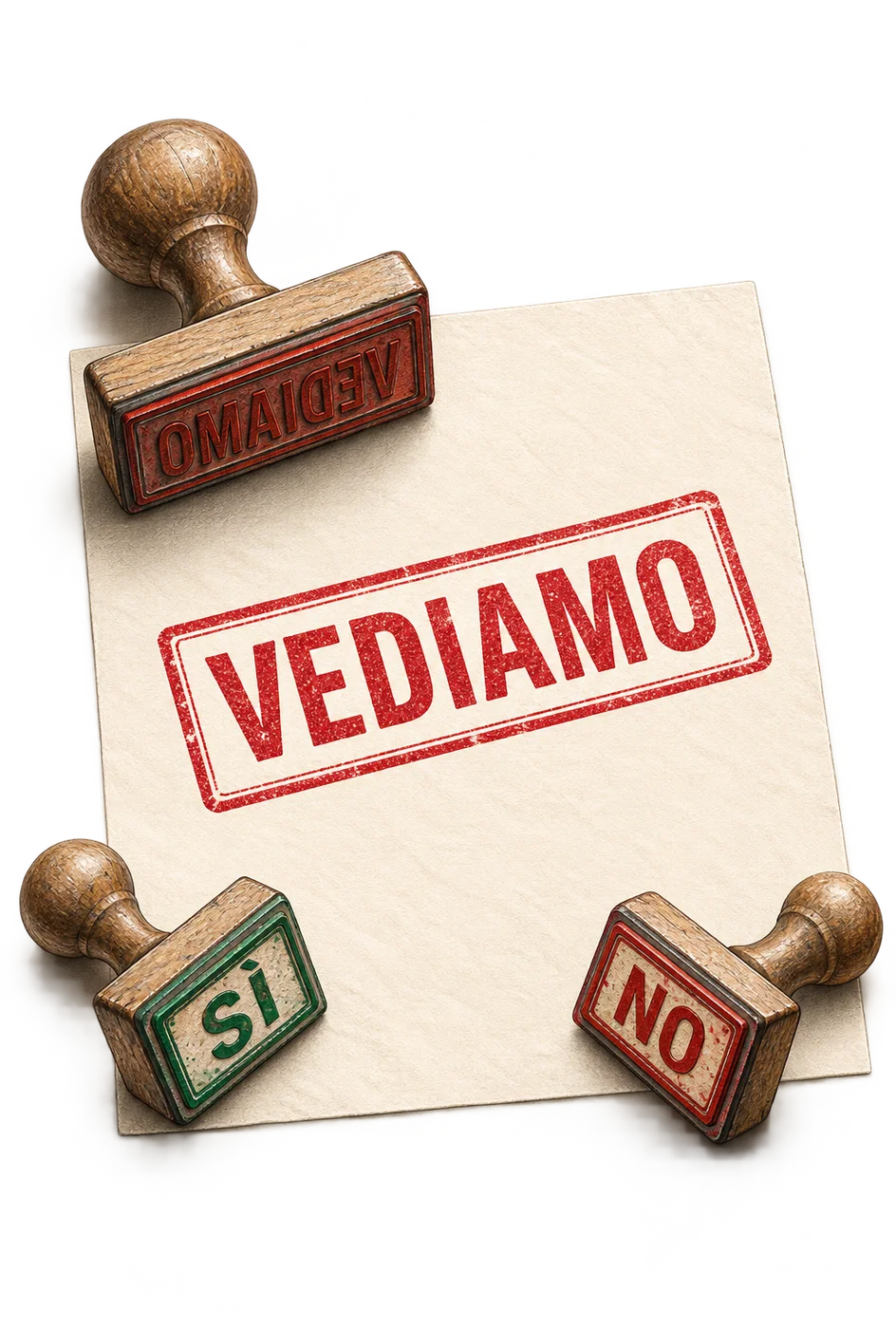
If you ask an Italian a question and they answer:
“Vediamo.”
do not picture them sitting there thinking.
They are probably already looking for a solution.
In many countries, rules exist mainly to establish what can and cannot be done.
In Italy, very often, they also help establish where to start.
That is why, before saying “it’s impossible”, an Italian tends to make one last attempt.
“Vediamo se riusciamo.”
“Vediamo cosa si può fare.”
“Vediamo se c’è un modo.”
That word contains a small act of optimism.
The idea that somewhere there may be an exception, an alternative route, a person to call, a detail that changes everything.
It is a way of thinking that surprises many foreigners.
To some, it means flexibility.
To others, uncertainty.
The truth is that, for Italians, the definitive answer comes only after all the possibilities have been explored.
Naturally, this attitude has a price.
When it works, it produces an extraordinary ability to solve problems.
When it does not, it risks turning every exception into a rule.
It is a fine line.
And Italians walk it every day.
Scene
— Mi servirebbe per domani.
— Domani è complicato...
Silence.
— Però vediamo.
The call ends.
The customer thinks they have received a “no”.
The company has already started calling suppliers, couriers and production.
The key to understanding it
For Italians, vediamo means: before I tell you no, I want to be sure there is no way I can tell you yes.