What it looks like
Va bene (“all right”), said quickly.
So it should mean: All right.
That would have been convenient.
What it really is
One of those Italian words that proves how overrated vocabulary can be.
To understand vabbè, knowing what it means is not enough.
You need to know how it was said.
Because:
— Vabbè.
— Vabbè!
— Eh, vabbè...
— Vabbè?
— Vabbè, dai.
— SE VABBÈ.
are six completely different conversations.
The scene
You booked a table for eight.
It is eight forty and you are still waiting.
You ask the waiter.
— Excuse me, we booked for eight.
— Unfortunately there was a problem with the reservations.
Vabbè.
It does not mean all right.
Nothing is all right.
It means: I understand that arguing will change nothing and, in the interest of civil coexistence, I have decided to end this conversation here.
A remarkable amount of information for two syllables.
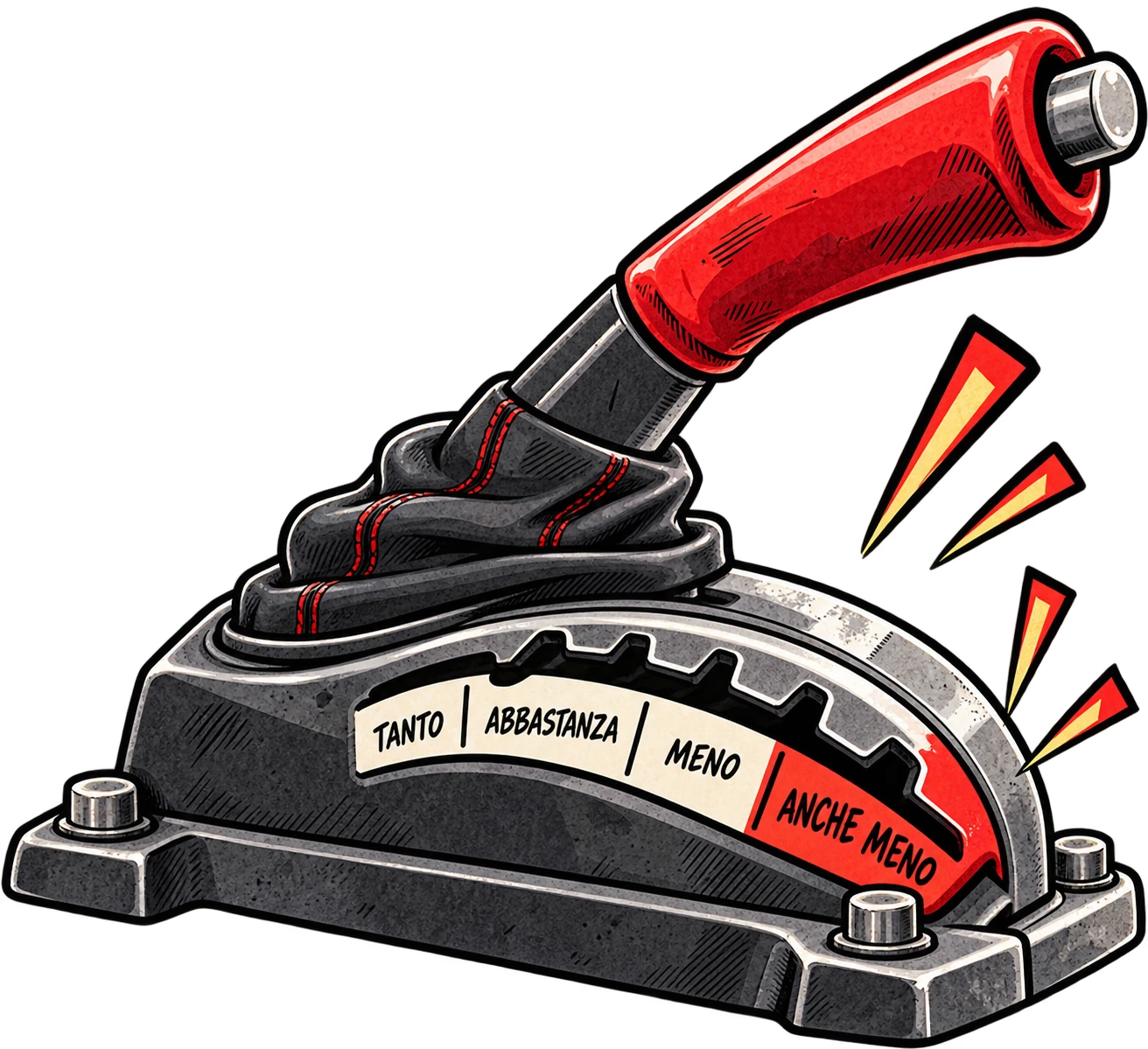
The problem is the tone
Vabbè! can mean: Fine, let’s do it.
Eh, vabbè... can mean: What can you do.
Vabbè, dai. can mean: I forgive you, but I would like it noted that I have reasons not to.
Vabbè? can mean: Are you done?
And then there is the final level.
Se vabbè.
By now, va bene is long dead.
It means: What you just said is so unlikely that I do not consider a real objection necessary.
Careful
Do not always translate vabbè as okay.
It is a trap.
Sometimes vabbè agrees. Sometimes it forgives. Sometimes it gives up. Sometimes it ends a discussion. Sometimes it tells you that not one word you just heard was believed.
And sometimes it really does mean all right.
Just to keep the difficulty level high.
Key to understanding
Vabbè is what happens when an Italian decides that a whole sentence would require disproportionate effort for the situation.
Tone, facial expression and, at advanced levels, the hands do the rest.
If you still did not understand which vabbè it was...
vabbè.