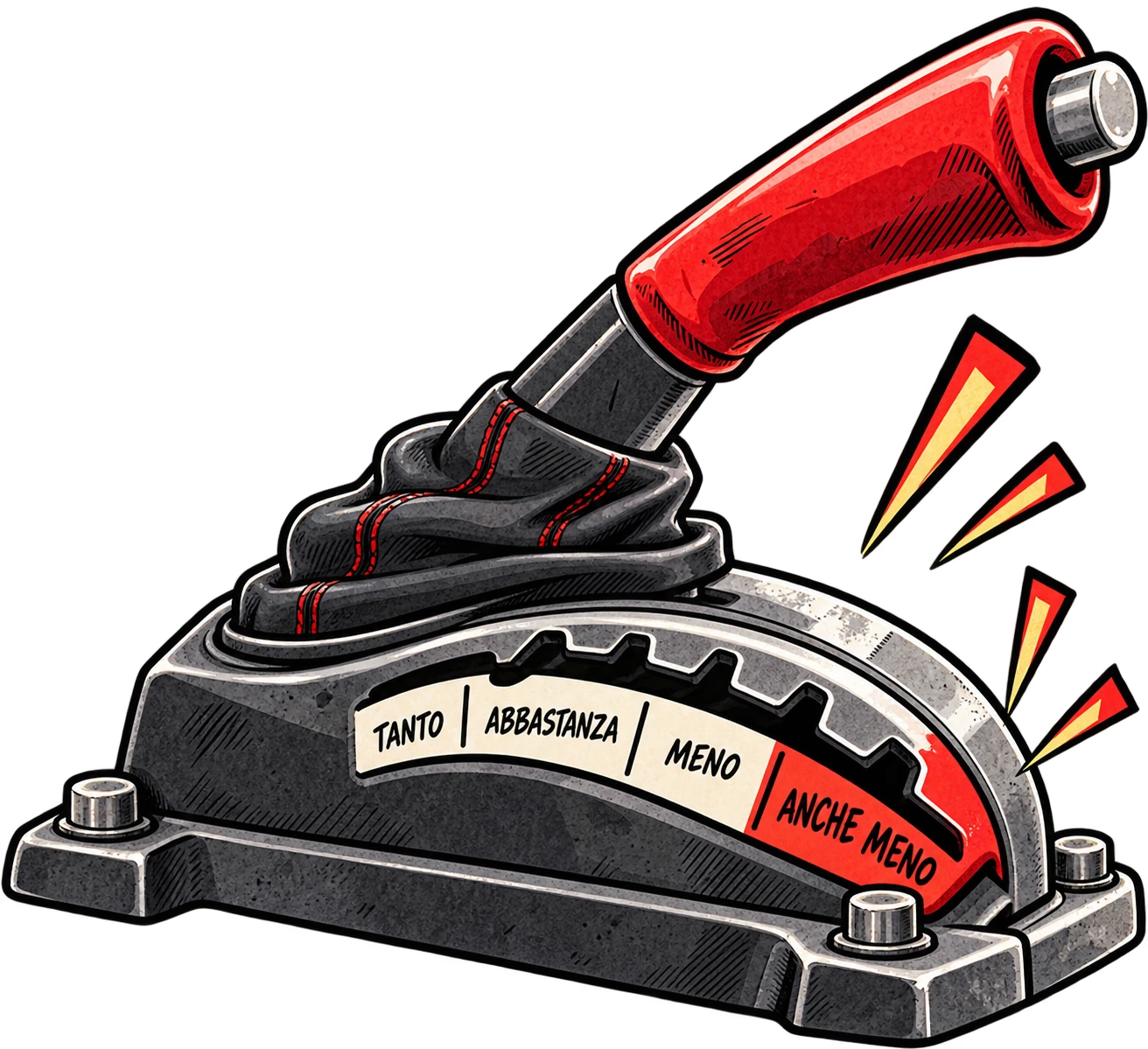
What it seems to be
An adverb.
What it really is
Of all the Italian words that confuse foreigners, magari is probably the most deceptive.
Because it does not mean just one thing.
It can mean “I wish”, “maybe”, “that would be nice”, “who knows”. Sometimes it almost sounds like a yes. At other times it resembles a no.
But none of these translations really captures the point.
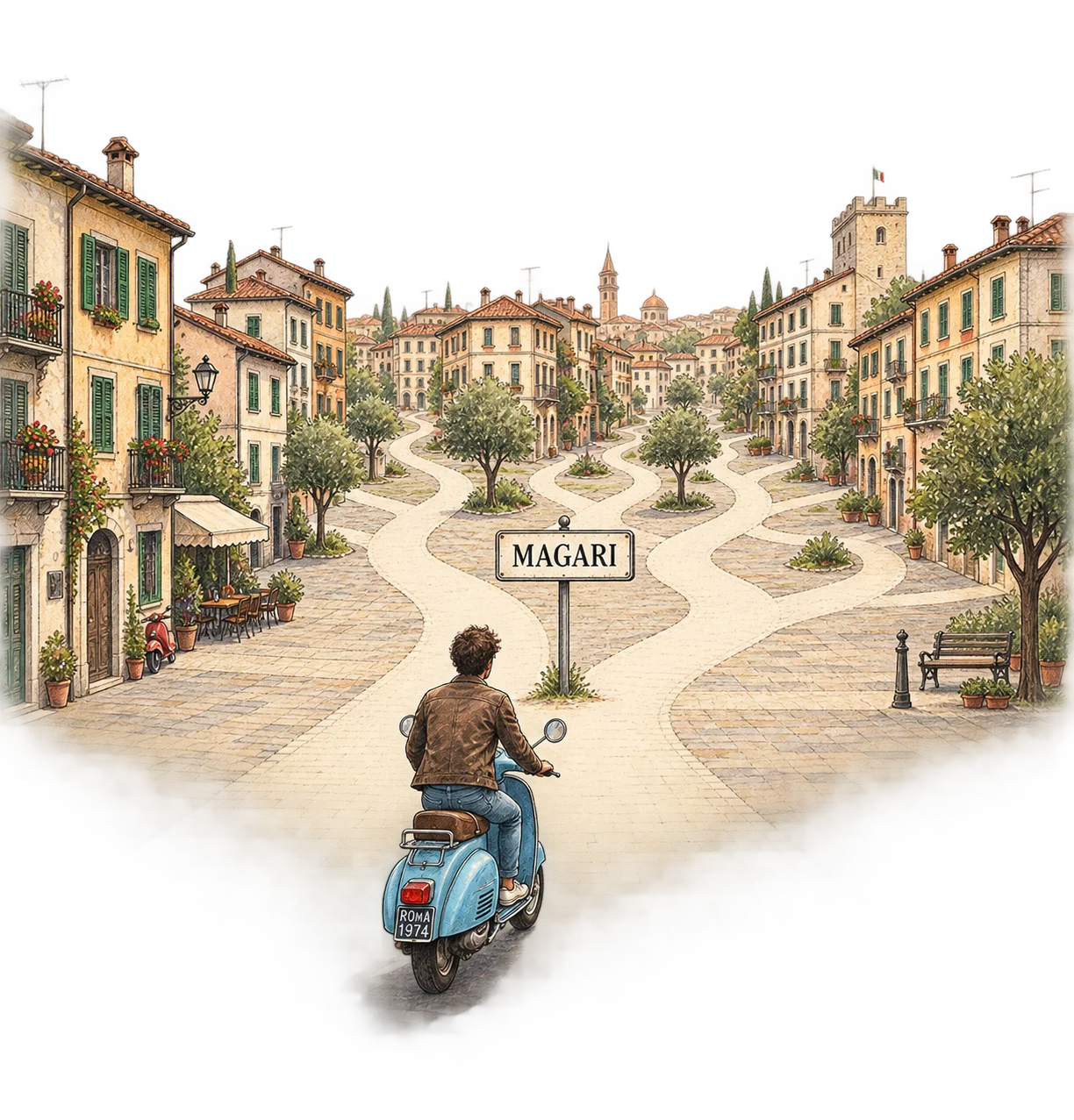
Magari is the word Italians use to refuse to close off the future.
In many cultures, an answer exists mainly to decide: yes or no.
Italians, on the other hand, have a natural distrust of definitive conclusions. They prefer to leave a crack open, give events a chance and wait for life to play its part.
So when a friend suggests a trip, a new job or even an improbable dream, the answer is rarely a categorical refusal.
It is magari.
It promises nothing.
But it does not kill the idea either.
It is a word that protects possibilities.
Perhaps that is also why Italians like it so much: it leaves tomorrow the right to surprise us.
Scene
— L’anno prossimo ci compriamo una casa in Toscana.
— Magari.
— Quindi dici di sì?
— No...
— Quindi dici di no?
— Ho detto magari.
The key to understanding it
For Italians, the future is too unpredictable to deserve a definitive “no”.