What it seems to be
A short walk.
What it really is
If an Italian suggests facciamo due passi?, do not worry about the distance.
It might be two hundred metres.
Or five kilometres.
In truth, distance was never the point.
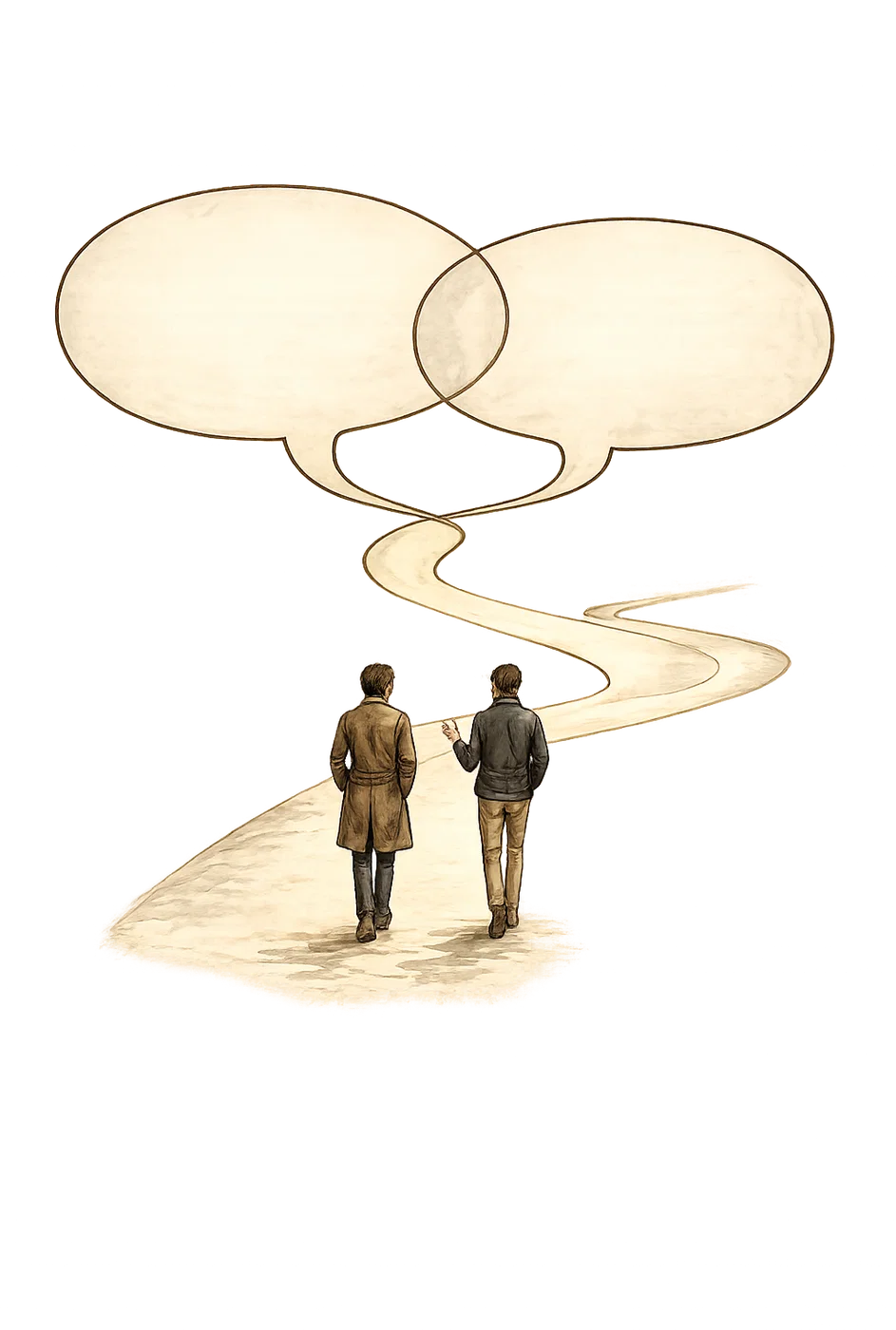
In Italy, people walk in order to talk.
The walk is not exercise. It is a way of extending a moment nobody wants to end. After dinner, after a coffee, after an aperitivo, someone almost inevitably suggests:
“Facciamo due passi?”
It is a gentle way of saying that the conversation is not over.
Often there is not even a destination. You go out, turn a corner, reach a square, meet someone, stop to say hello, change direction, get a gelato and, almost without noticing, find yourself exactly where you started.
The Italian walk is curious for another reason too.
It is not about getting somewhere.
It is about being together along the way.
That is why Italian cities are full of places designed more for moving through slowly than arriving quickly: squares, seafront promenades, arcades, historic centres, main streets.
They are not merely urban spaces.
They are scenery for relationships.
Scene
— Dove andiamo?
— Da nessuna parte.
— E allora?
— Facciamo due passi.
One hour later.
— Ma siamo tornati alla macchina.
— Certo.
The key to understanding it
For Italians, a walk is not a way to reach a place. It is a way to make a moment last longer.