What it really is
The sincerest compliment you can give the person who cooked.
Many Italians learn as children that you do not play with food, you do not speak with your mouth full and you use your cutlery properly.
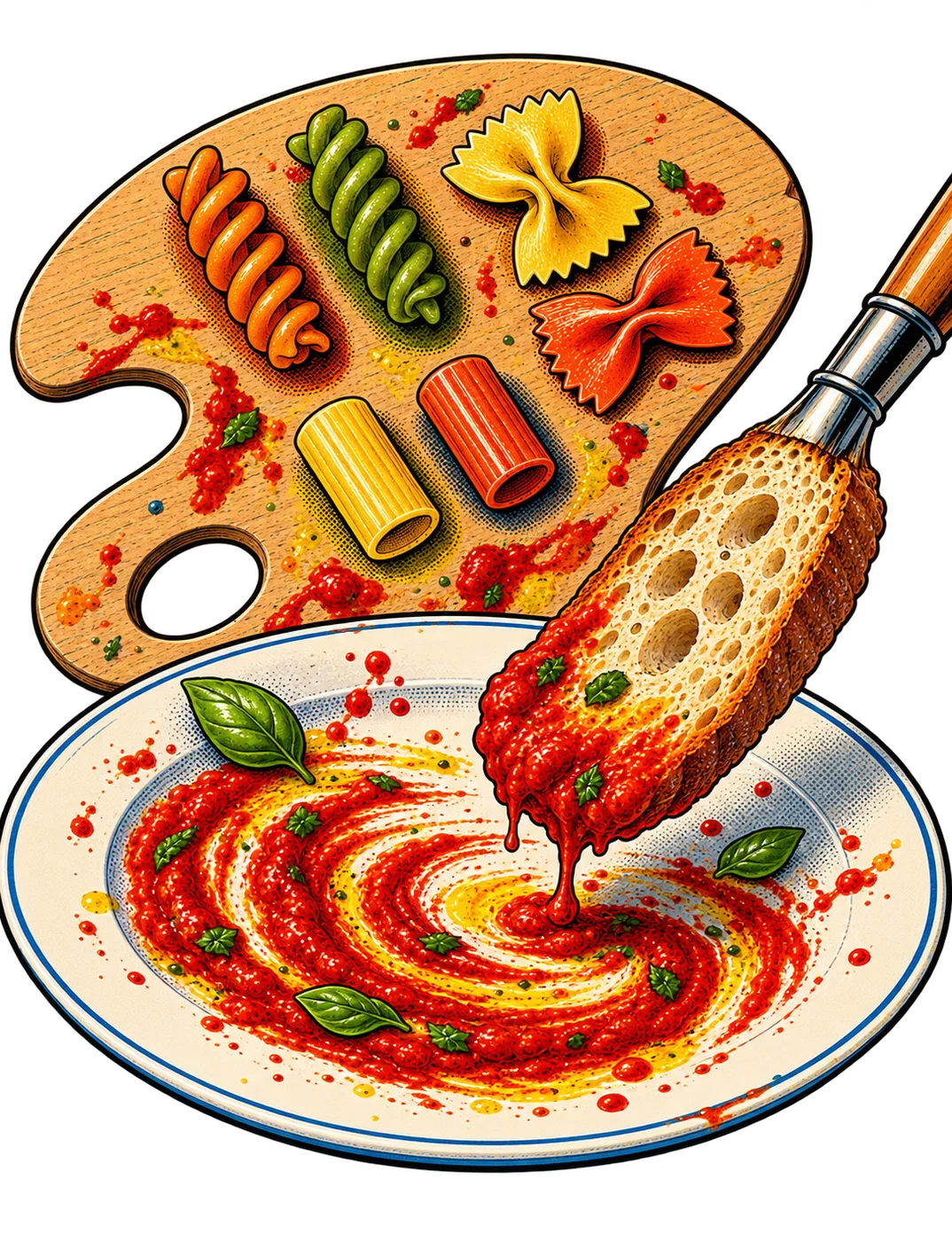
Then comes the moment of the scarpetta.
A piece of bread.
The last spoonful of sauce.
The plate comes back clean.
Seen from the outside, it can look like a small breach of table manners.
In Italy, it is often the opposite.
Fare la scarpetta means saying something very simple:
“It was so good I did not want to leave even a drop.”
That is why a curious scene often occurs in Italian homes.
The guest hesitates.
“Posso?”
The person who cooked smiles.
“Certo!”
In fact, in many families the opposite happens.
If you do not fare la scarpetta, someone may even think you did not enjoy the meal quite enough.
The scarpetta says something very Italian.
Good manners matter.
But they never matter more than the pleasure of being together.
If a rule makes lunch colder or more formal, it can be set aside.
If a gesture sincerely communicates appreciation, then that gesture becomes polite, even if etiquette says otherwise.
For Italians, food is not only about nourishment.
It is about building relationships.
And that is precisely why the scarpetta is not really about the bread.
It is about the cook.
The key to understanding it
For Italians, etiquette is there to make people feel at ease. Not to stop them enjoying their lunch.