What it seems to be
A compliment.
What it really is
A very quick way of taking a position.
Something curious happens in Italy.
We rarely witness something without commenting on it.
A dish arrives at the table.
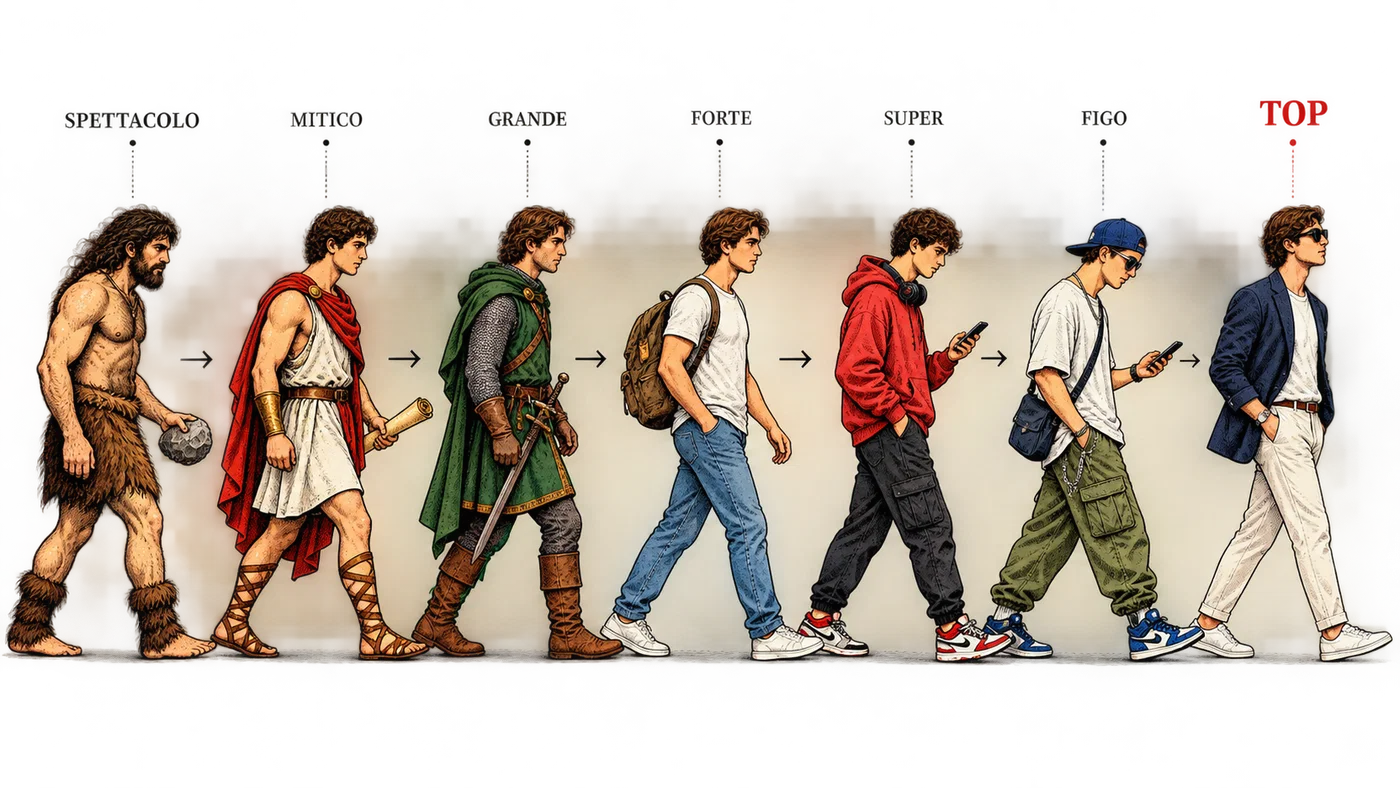
“Top.”
A friend buys a new car.
“Spettacolo.”
Someone tells an incredible story.
“Assurdo.”
A holiday goes better than expected.
“Devastante.”
The words change over time.
Yesterday it was forte.
Before that, mitico.
Tomorrow it will be something else.
But the mechanism remains the same.
For Italians, describing an experience and commenting on it are almost the same thing.
Seeing is not enough.
We need to let other people know how it made us feel.
That is why a single word is often enough.
It does not describe reality.
It describes our relationship with that reality.
A foreigner might think this is a superficial habit.
In fact, it is a way of creating complicity.
That little comment invites the other person to do the same.
To say whether they agree.
To share the enthusiasm.
Or distance themselves from it.
The conversation continues.
The key to understanding it
Italians do not merely share facts. They constantly share their judgement of the facts.
That is why, when something strikes us, we almost always feel the need to say at least one word.
Sometimes that word is simply:
Top.