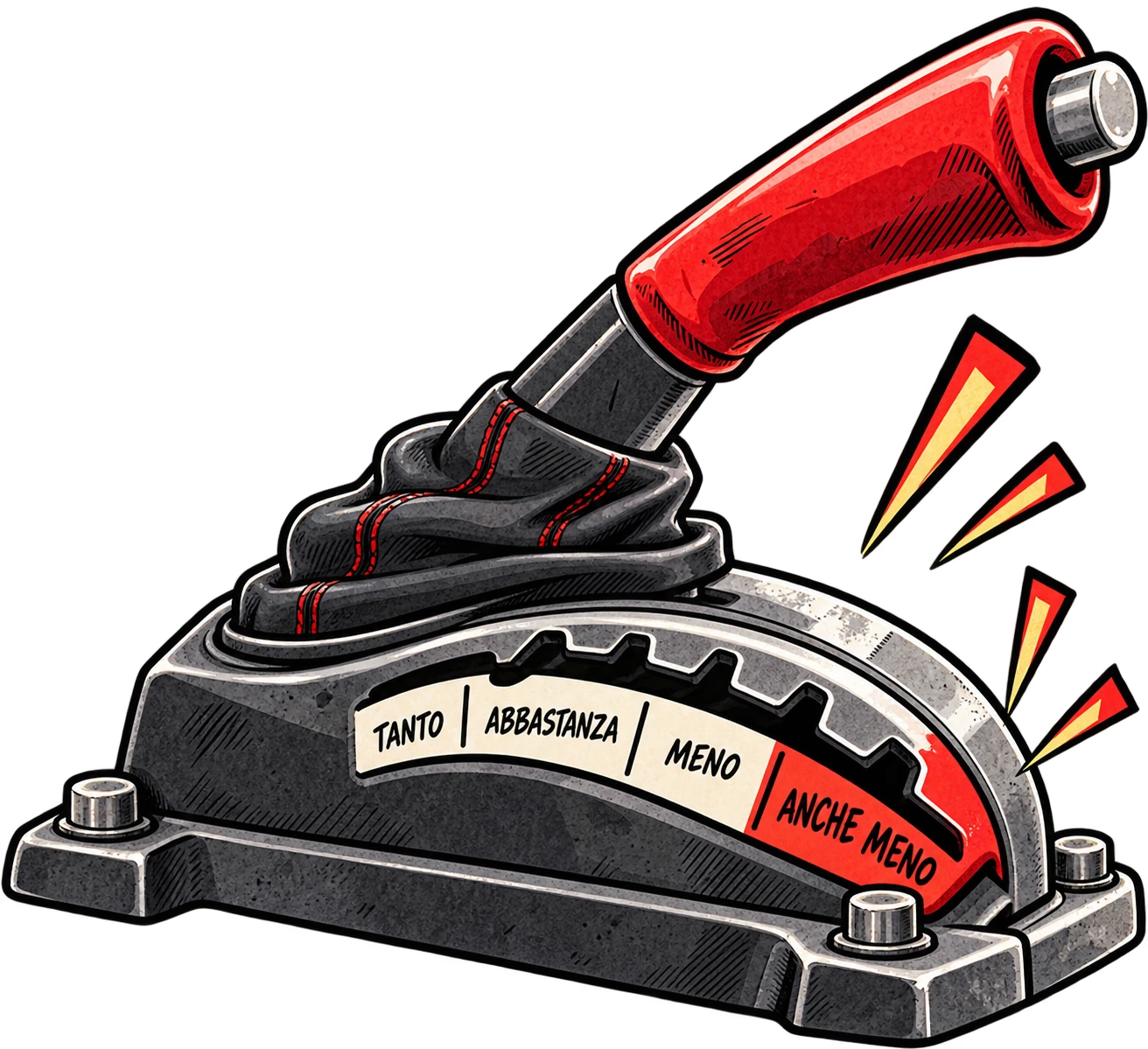
What it seems to be
Giving up.
What it really is
One of Italians’ favourite ways of recognising one another.
There is a question that, in Italy, rarely seeks a real answer.
“Come va?”
Very often it is merely the beginning of a small ritual.
“Eh...”
“Lascia perdere.”
From that moment on, the conversation may be about traffic, taxes, work, the weather, politics, bureaucracy or football.
The subject changes.
The mechanism remains the same.
Complaining, in Italy, is often a way of getting on the same wavelength.
It does not necessarily mean being pessimistic.
It means telling the other person:
“I know you understand what I’m talking about.”
That is why the listener rarely tries to solve the problem.
They answer with another complaint.
Or a smile.
Or simply:
“Non me ne parlare.”
The conversation has begun.
Then something even more curious happens.
Italians can criticise their own country with astonishing severity.
Traffic.
Trains.
Politics.
Schools.
Healthcare.
The justice system.
Practically everything.
But as soon as a foreigner makes the same criticism, something changes.
“Sì, però...”
And out come the food.
The art.
The landscapes.
The quality of life.
The ability to arrangiarsi.
The creativity.
Suddenly, the very country that seemed indefensible becomes something to protect.
The key to understanding it
Italians complain far less in order to change things than they do in order to recognise themselves in one another.
And when an outsider criticises something that belongs to them too, they immediately remember an unwritten rule.
You can make fun of the family.
But only from the inside.