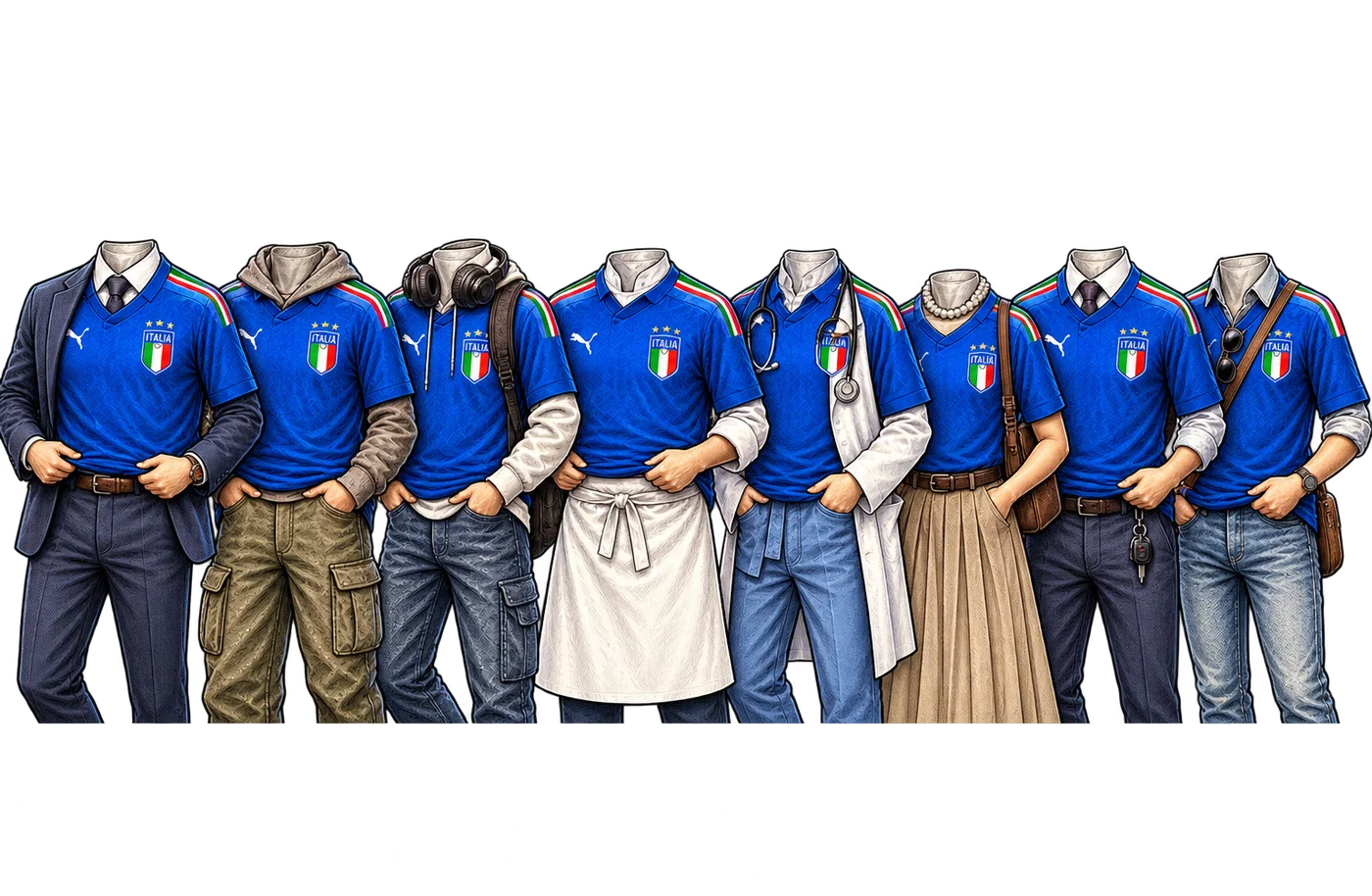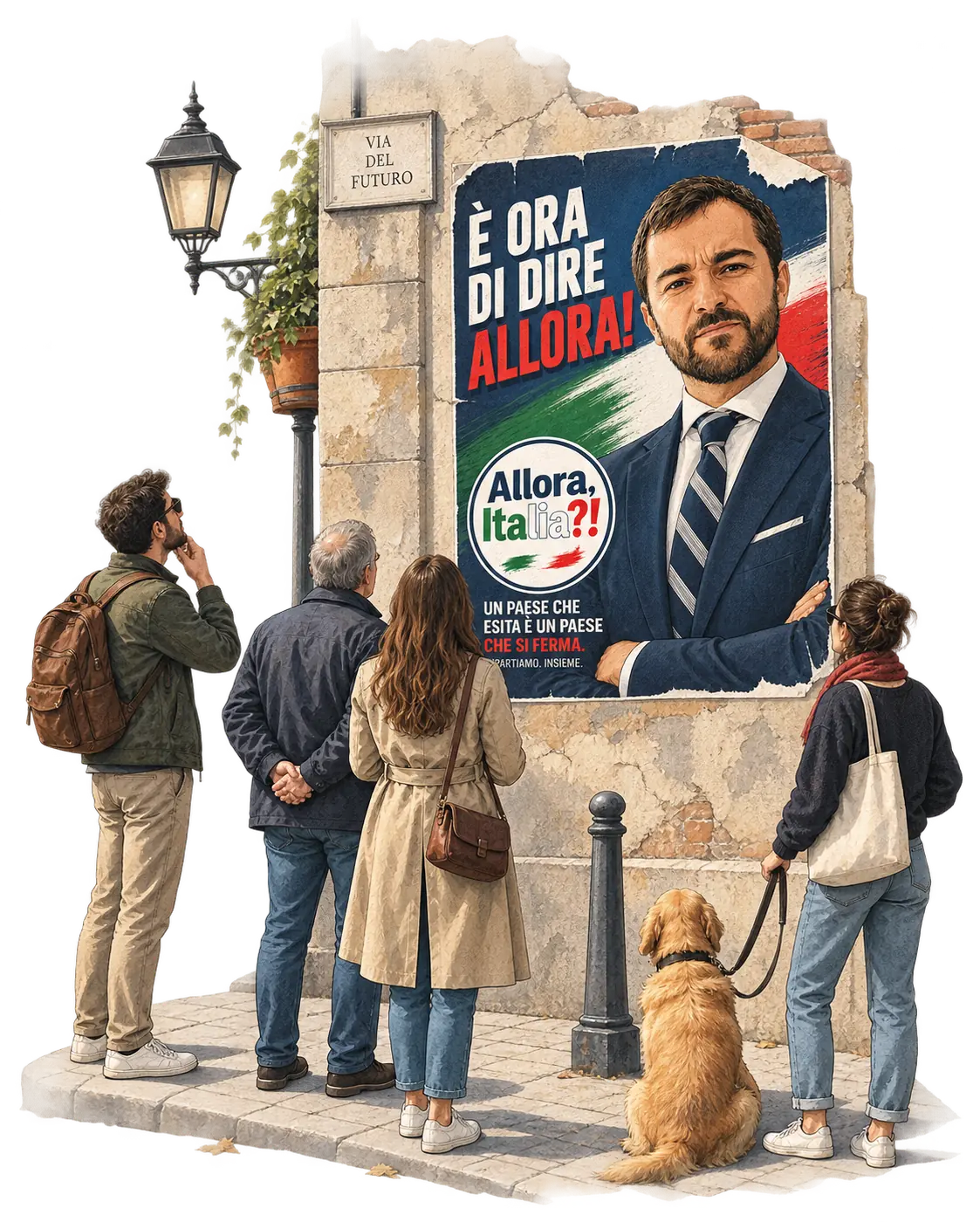
What it looks like
Someone is about to play a match.
What it really is
In Italy, when someone scende in campo — “takes the field” — there is very often no field at all.
No grass.
No ball.
No changing rooms.
Instead, there is someone who was doing something else until yesterday and has now decided that the country needs them.
The expression means entering political life directly, but it carries something more theatrical: you do not merely stand for election.
You take the field.
As if politics were a match that had already started badly and someone, having watched from the stands, stood up and said:
All right. I’m playing now.
The expression already existed, of course. But in 1994 Silvio Berlusconi turned it permanently into political language when he announced his entry into politics with three words that became famous:
“I have chosen to take the field.”
Since then, in Italy, the field has remained exactly where it was.
Businesspeople, judges, professors, mayors, television personalities and anyone wishing to convey that they are not simply presenting a candidacy all take to it.
They are arriving.
And above all, they always arrive because the situation demands it.
No one takes the field by saying:
“I’d like a secure salary, a little visibility and perhaps the chance to sort out a couple of personal matters.”
That would sound insufficiently statesmanlike.
One does it for the country.
To change things.
Out of a sense of responsibility.
Because one can no longer stand by and watch.
That saving the country and improving one’s own circumstances occasionally happen to move in the same direction is one of those fortunate coincidences Italian democracy prefers not to investigate too closely.
Then come the election campaign, the alliances, the polls and the talk shows.
And suddenly you understand why it was called a field.
The key
In Italian, candidarsi describes what you do.
Scendere in campo describes how you want others to picture the moment you decided to do it.