What it looks like
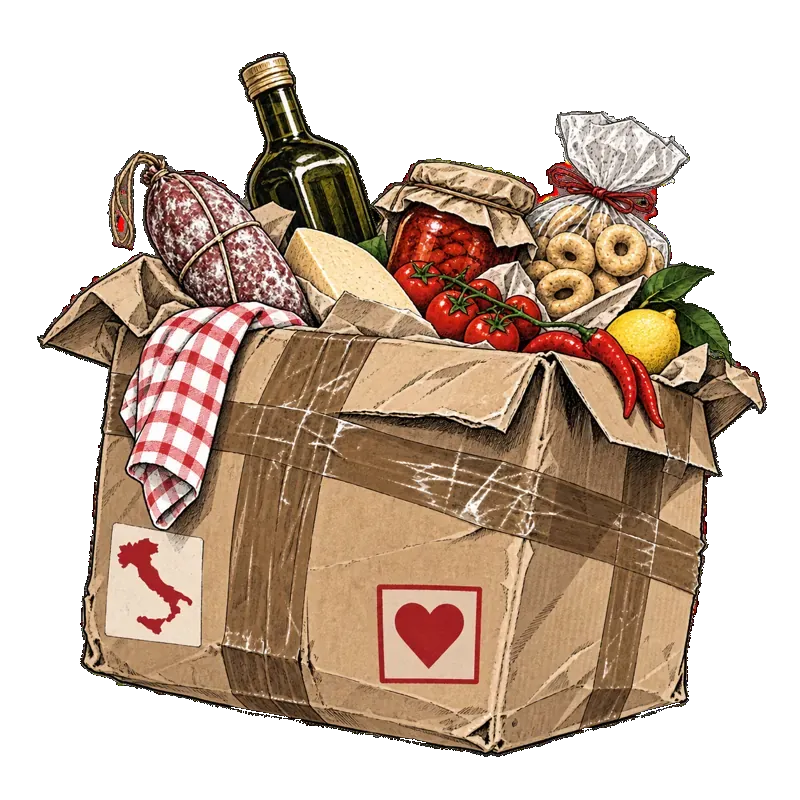
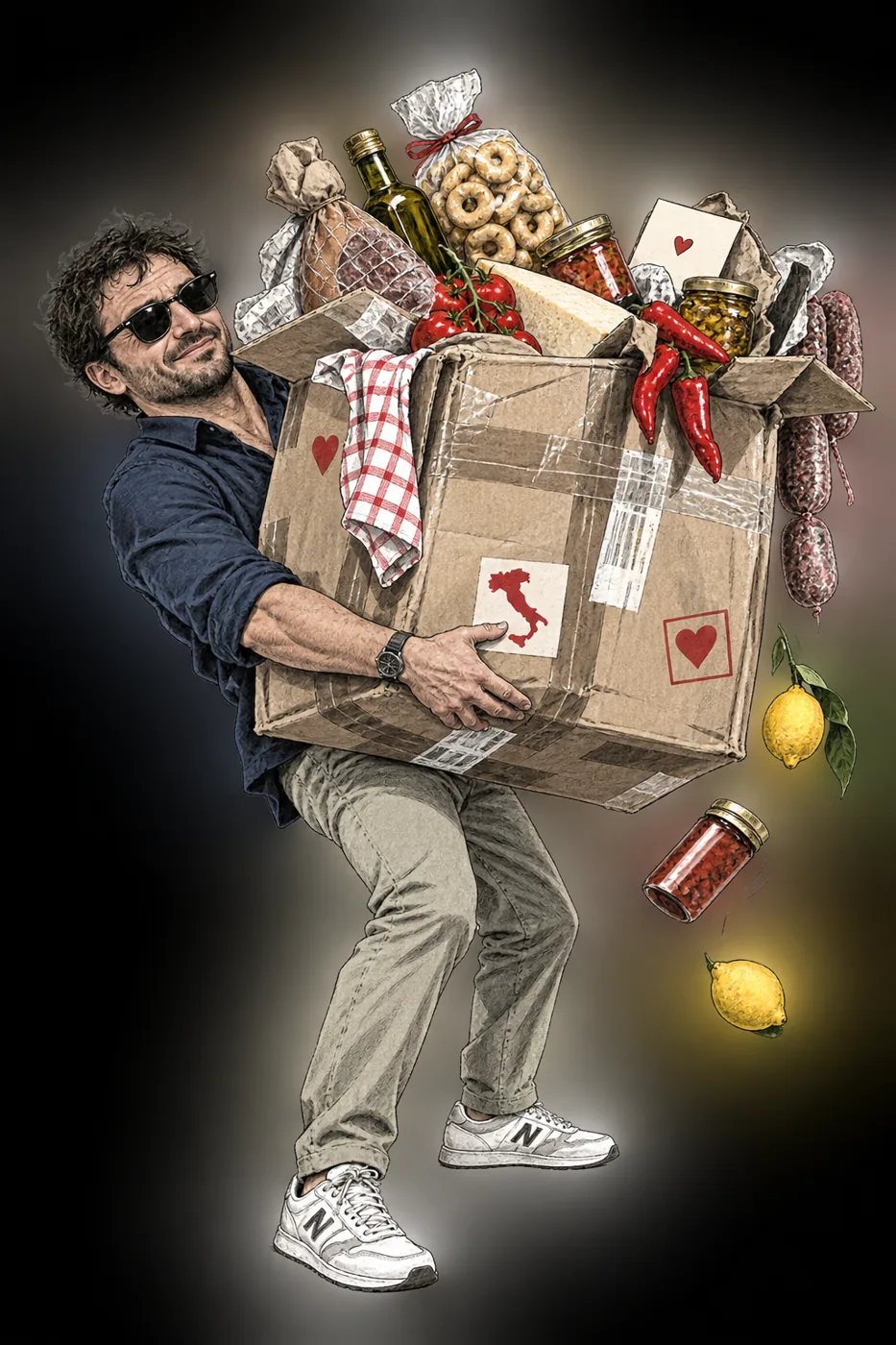
A cardboard box. Usually far too large for the “couple of things” your family said they were sending.
What it is
The real bridge across the Strait. It leaves a kitchen in Southern Italy and reaches a home in the North packed with cured meat, preserves, cheese, olive oil and at least one container nobody remembers requesting.
The scene
Milan, Turin, Bologna, Verona. The intercom rings: “Courier.” The transplanted Southerner goes downstairs and finds eighteen kilos of cardboard. Mum had said: “I’m sending you a couple of things.” Inside: enough supplies to survive a naval blockade. Then the phone rings from hundreds of kilometres south: “Did it arrive?” You may have graduated, moved away, married and had children. Apparently you still cannot be trusted to source a pepper.
Italy travels both ways
For generations, people left the Mezzogiorno for the industrial cities and later the universities and professional jobs of Central and Northern Italy. The parcel makes the reverse journey: a tiny counter-migration of olive oil, preserves and family guilt.
How to read it
Il pacco da giù is affection, household economics and Italian geography compressed into cardboard. The North may provide work, university and careers; the family back South remains unconvinced that tomatoes are actually sold up there. The North–South question remains unresolved. But at least it now has tracking.