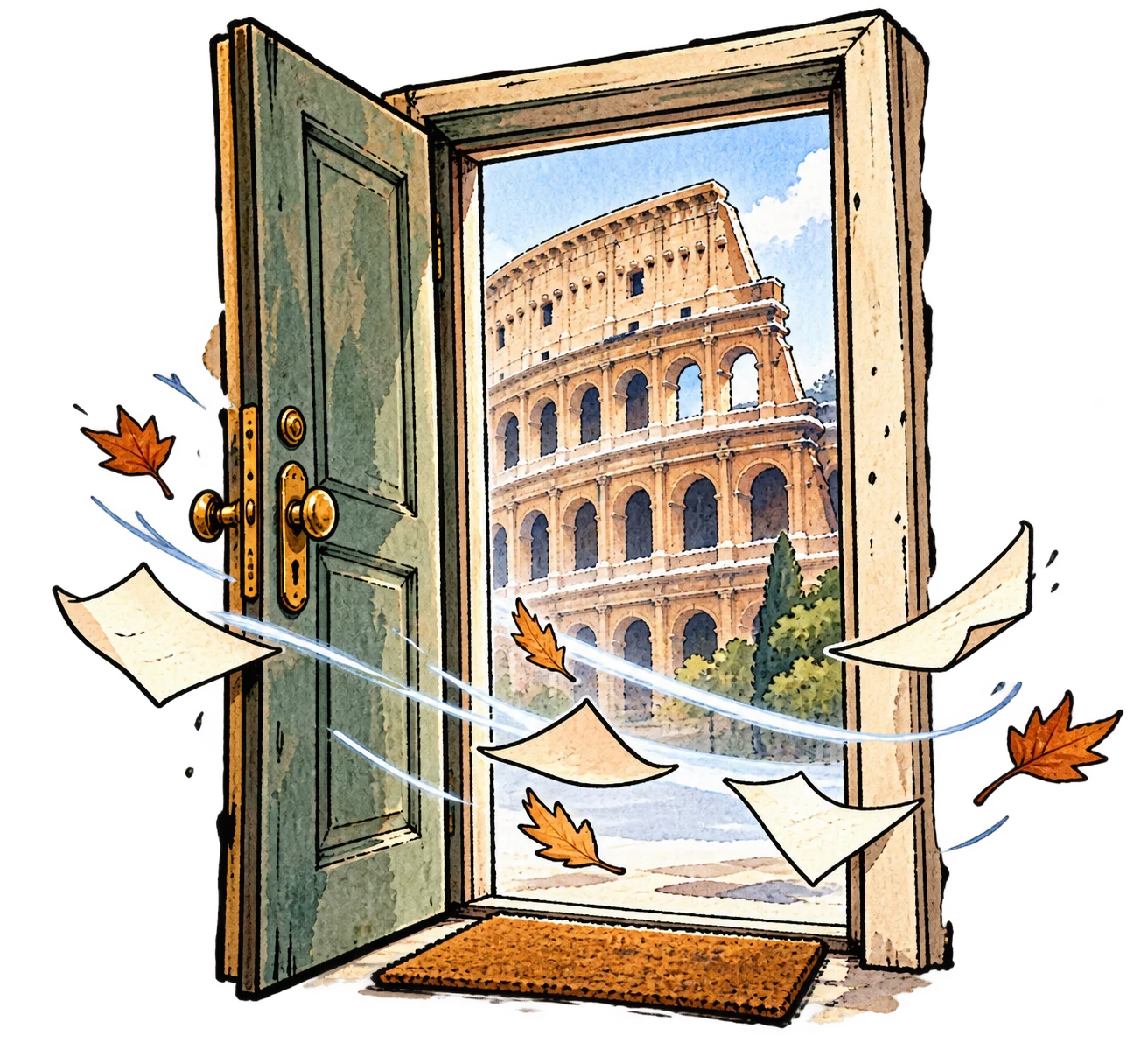
What it looks like
A friendly reminder. A little piece of affectionate advice before saying goodbye.
What it really means
I know perfectly well that you know what to do. I am telling you anyway, so from this moment the responsibility is officially yours.
«Mi raccomando, behave.» «Mi raccomando, wrap up warm.» «Mi raccomando, text me when you arrive.»
It requires no answer. The information does not even need to be new.
It assigns a task, responsibility and a very small amount of guilt at the same time.
How it works
The Italian mother is its natural habitat.
The child has the backpack, shoes, snack and school diary. He knows where school is. He has been going since September.
His mother watches him leave: «Mi raccomando.»
Mi raccomando what? Everything.
Behave. Listen to the teacher. Do not lose your sweatshirt. Eat your snack. Remember you have a family.
It also works beautifully among adults: «The client arrives at ten. Mi raccomando.» Nobody asks “What?” That would already be a bad start.
The key
When an Italian says «mi raccomando», the important part is often exactly what remains unsaid.
It means: “You already know what I expect from you. And you know that I know you know.”
Two words, zero new information, total responsibility. Mi raccomando.