What it looks like
A question.
Someone wants to know how you are.
Health, work, family, mood: come va?
A simple question that should have an equally simple answer.
What it means
Very often, a greeting with a question mark.
Come va? can be a genuine question, of course. But it can also simply mean:
I’ve seen you. I acknowledge you. I’m being friendly. We can start talking.
Which is why Italian has an almost perfect answer: “Bene, dai.”
How it really works
The masterpiece is all in that dai.
Bene means things are fine.
Bene, dai means something closer to: we can reasonably declare things fine without going into too much detail.
Everything does not actually have to be fine. Work may be a disaster. You slept five hours. The car has developed a new noise. Your child has a fever. You are still trying to understand why the bank charged you 38 euros.
But you are here. You function. Bene, dai.
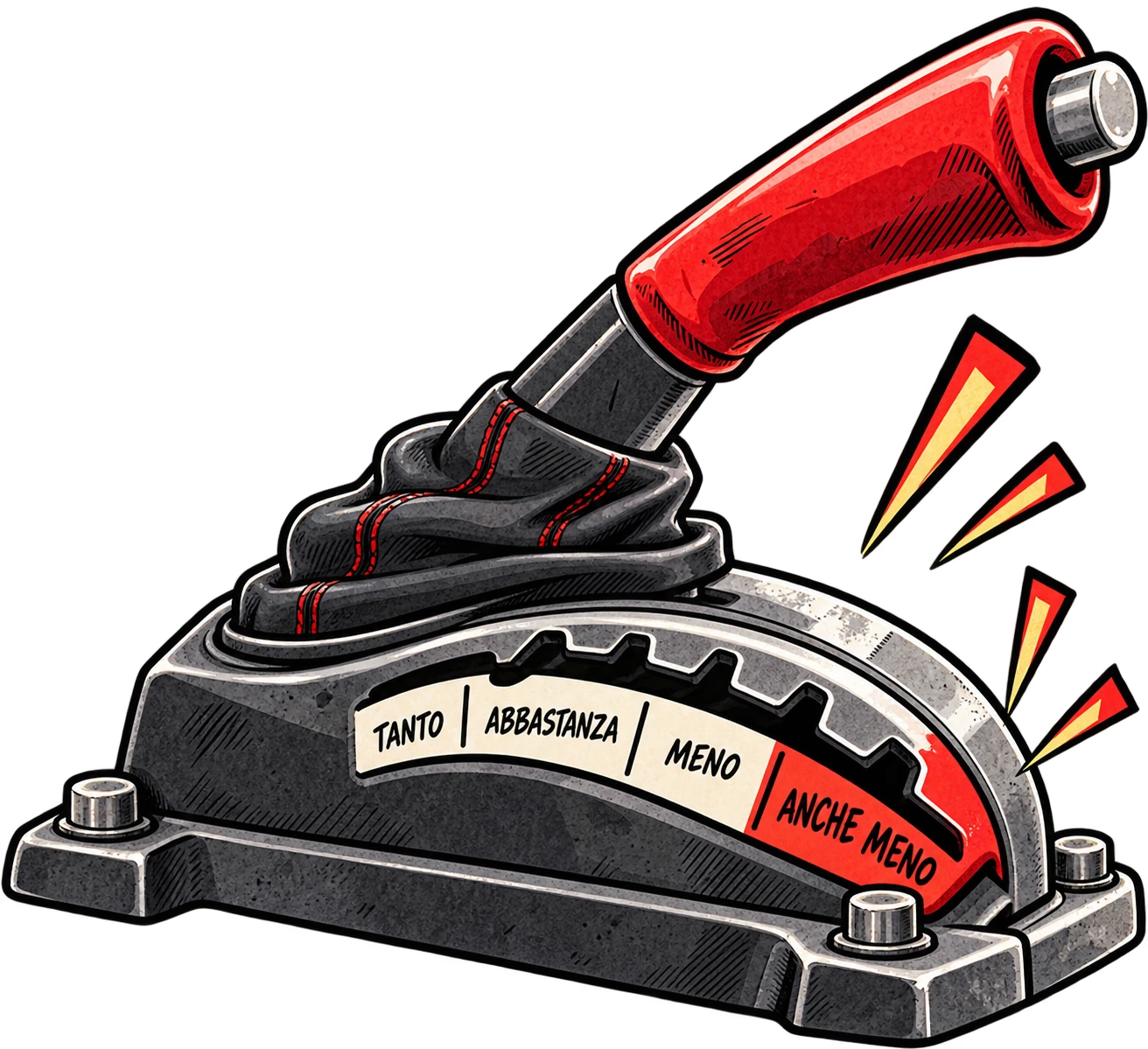
There are, naturally, other levels.
“Benissimo!”
Things really are great. Or you would like us to believe they are.
“Bene.”
Fine.
“Bene, dai.”
The vast middle zone of Italian existence.
“Insomma…”
Careful: the question may suddenly turn into a real conversation.
“Lascia perdere.”
You asked. You now have responsibilities.
Because Come va? has one important feature: you never know for certain whether you are making conversation or merely saying hello.
The answer tells you.
The key
In Italy, asking Come va? does not necessarily mean wanting a full report on how things are going.
Above all, it means giving the other person the choice of how much to tell you.
They can say bene and move on. They can add that providential dai and signal that things are under control, at least officially. Or they can pause, make a particular face and say: “Eh…”
At that point, everything has changed. The door that was merely ajar has opened.
Perhaps that is the real purpose of Come va?: it does not demand intimacy, but it makes intimacy possible.
And Bene, dai does the exact opposite: it closes the file elegantly without actually lying.
It is not optimism. It is routine maintenance of existence.