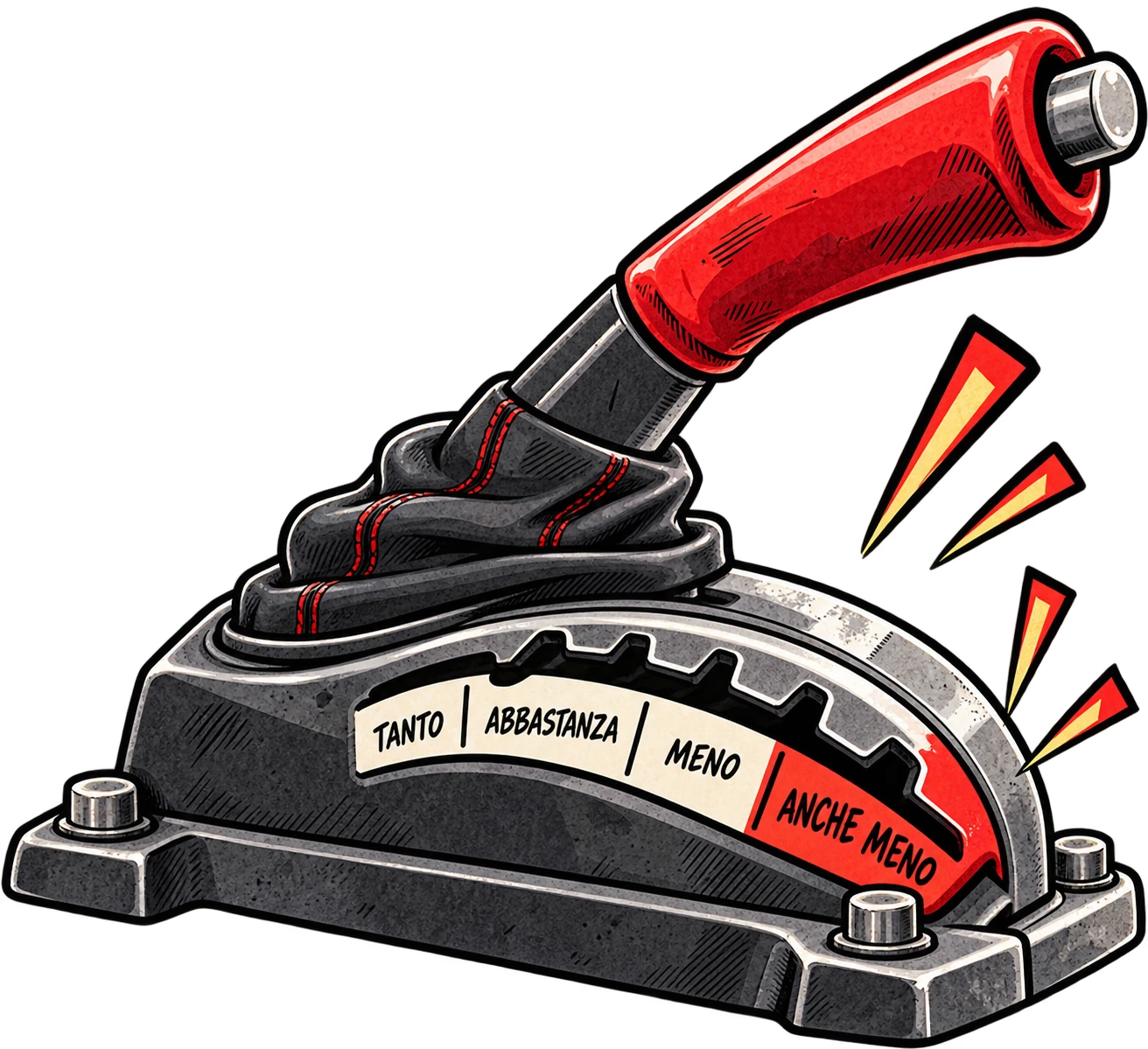
What it seems to be
A swear word.
What it really is
If you study Italian from textbooks, they will tell you that cazzo is a vulgar word.
That is true.
But it is also profoundly incomplete.
Because in everyday life Italians use it much more often as emotional punctuation than as an insult.
It can express anger.
Surprise.
Pain.
Admiration.
Frustration.
Enthusiasm.
Even affection.
“Che cazzo fai?”
“Ma che cazzo dici?”
“Che cazzo di macchina!”
“Cazzo, hai ragione.”
“Eh, cazzo...”
The word changes meaning completely.
The emotion, however, remains perfectly clear.
To a foreigner, this is almost incomprehensible.
How can the same word be used to say so many things?
To an Italian, the answer is simple.
The meaning is not in the word.
It is in the intonation.
It is in the look.
It is in the relationship with the person in front of us.
Italians speak with their whole body.
Their hands.
Their face.
Their voice.
That is why a single word can take on dozens of different meanings without causing confusion.
The dictionary says one thing.
The relationship says everything else.
Of course, there are situations in which cazzo remains offensive.
A formal meeting.
An institutional communication.
A job interview.
But among friends, colleagues or people who share a certain degree of familiarity, the word loses much of its original function.
It becomes an amplifier.
It does not explain a concept.
It makes you feel how important that concept is.
Perhaps this is what surprises people arriving in Italy most of all.
They discover that Italians do not always need more words to express an emotion.
Sometimes one is enough.
Scene
— Hanno cancellato il volo.
— Cazzo.
— E adesso?
— Cazzo...
Five minutes later.
— Però ci hanno trovato un altro posto.
— Cazzo!
The word is the same.
The emotion has changed three times.
The key to understanding it
For Italians, some words do not describe reality. They transmit the intensity with which reality is being experienced.