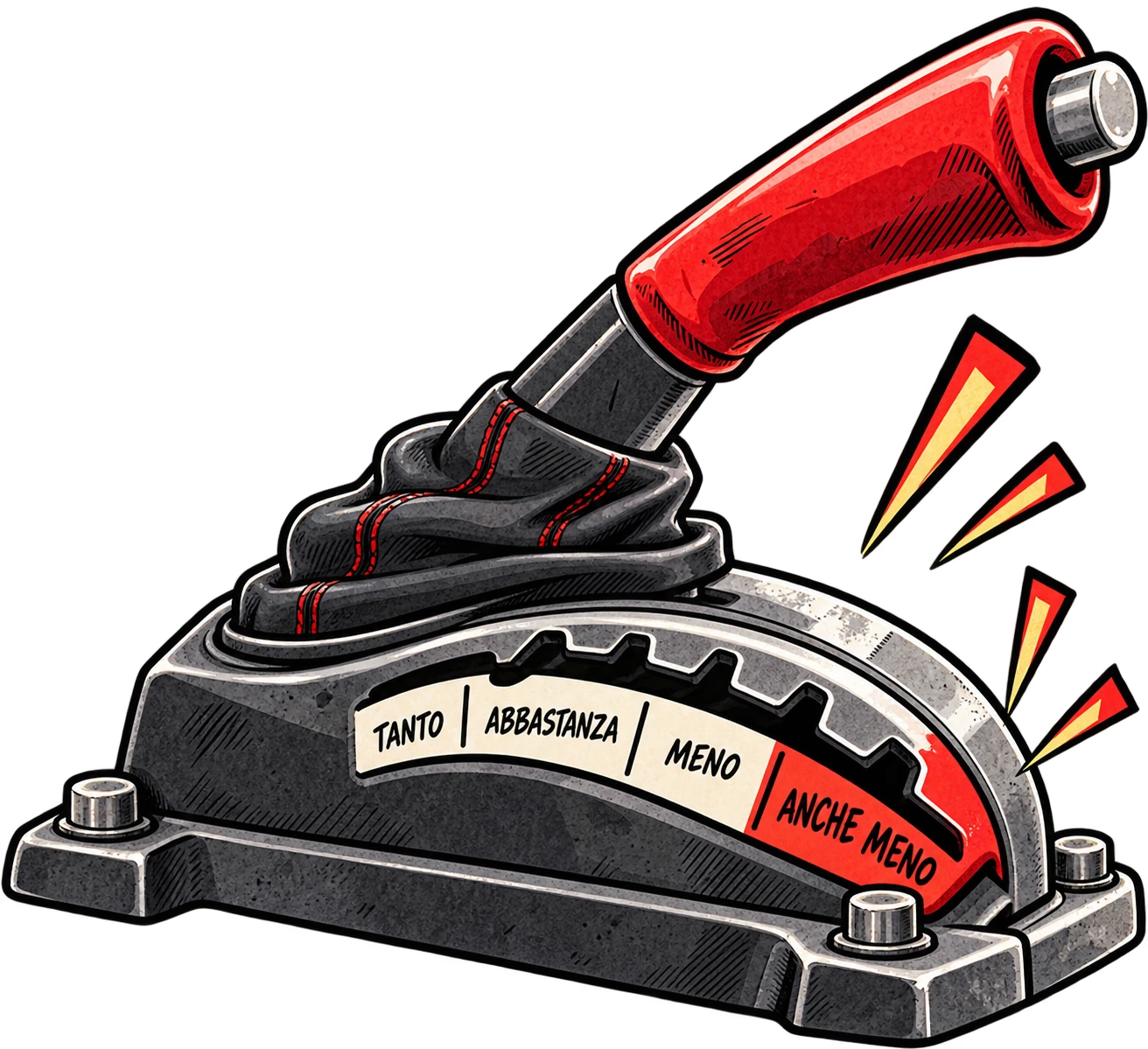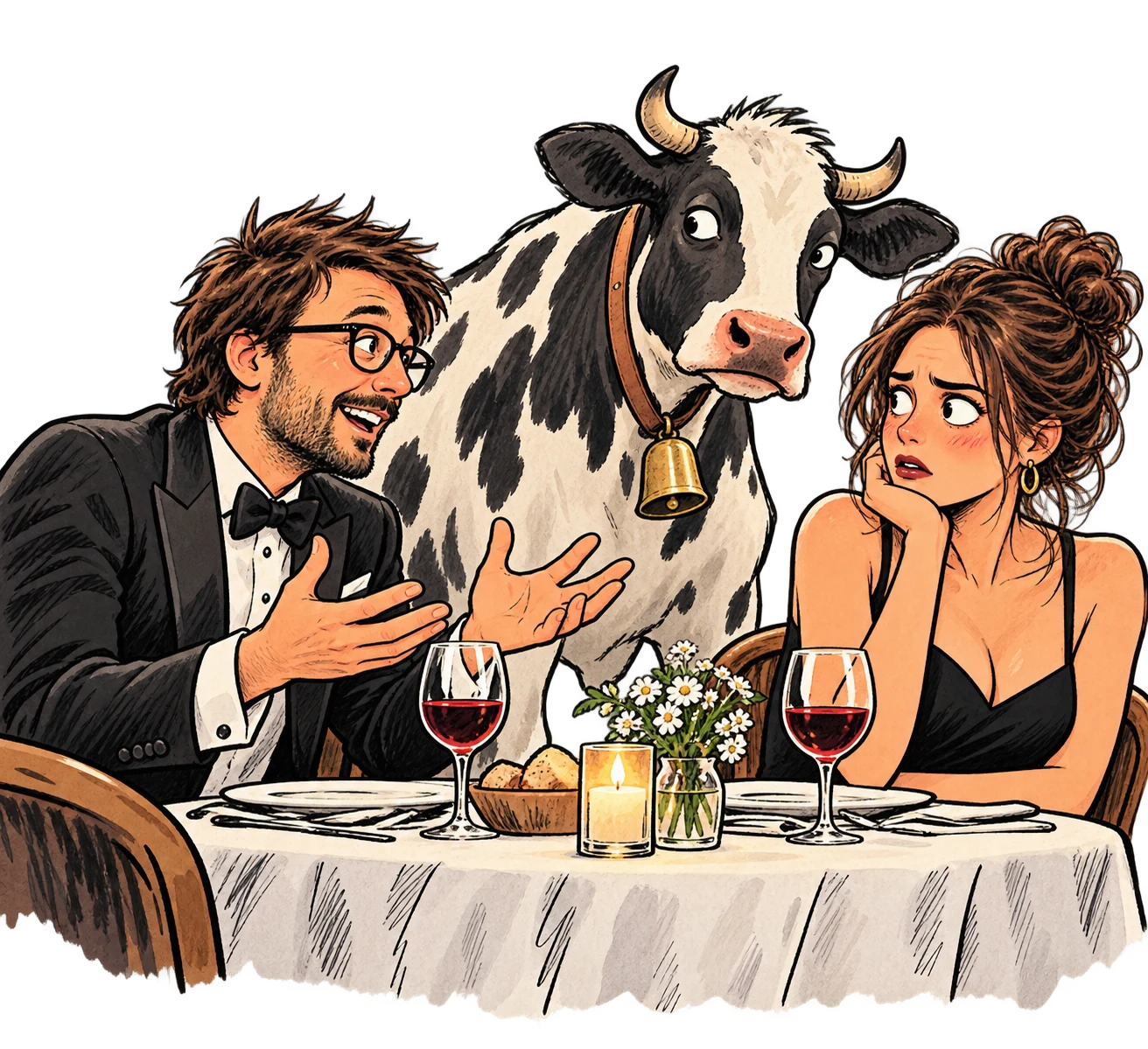
What it seems to be
A surprisingly rural destination.
You are not sure where things were going before, but now they have all ended up in the cow.
What it means
The moment when a situation that could still have ended well suddenly takes the wrong turn. And accelerates.
A negotiation can andare in vacca. A dinner. A holiday planned for six months. A meeting that began with “I’ll be very brief”.
Above all, a romantic pursuit can go completely off the rails.
She laughs at your jokes. She looks for you. She replies immediately. She agrees to go out.
All you have to do is keep behaving like a normal person.
Then you send a four-minute-and-twenty-seven-second voice message explaining how you really feel.
Tutto in vacca.
A subtle question of responsibility
Italian, however, gives the cow two entrances.
A situation can andare in vacca: it simply goes wrong. Nobody seems specifically responsible. Circumstances. Events. Fate. Mercury retrograde.
Or somebody can mandare tutto in vacca: send the whole thing to ruin.
And now fate has nothing to do with it.
“It was going brilliantly. Then you talked about your ex for forty minutes.”
You ruined the whole thing.
The first construction removes responsibility. The active one looks for someone to blame.
Curiously, when we tell the story, things tend to go wrong. When other people tell it, we are usually the ones who made them go wrong.
The key to understanding it
For something to go in vacca, there first has to be something worth saving.
That is what separates the expression from simply “going badly”. If it was awful from the beginning, it did not go in vacca: it was already there.
The real tutto in vacca requires a fatal instant: one sentence too many, the wrong joke, an unsolicited confession, a “can I be honest?” when nobody asked for honesty.
It is the exact point you can identify afterwards and say:
“There. That was when I should have kept my mouth shut.”